
Glaucoma can feel like a silent thief, slowly taking peripheral vision long before symptoms are noticed. At MacQueen Eye Care Center, we emphasize early detection because once sight is lost, it cannot be restored. As an experienced optometrist providing eye care in Chicago, IL, Dr. Constance MacQueen proactively diagnoses and manages glaucoma, so patients who seek an optometrist near you or a glaucoma doctor in Chicago, IL, find attentive, technology-driven care.
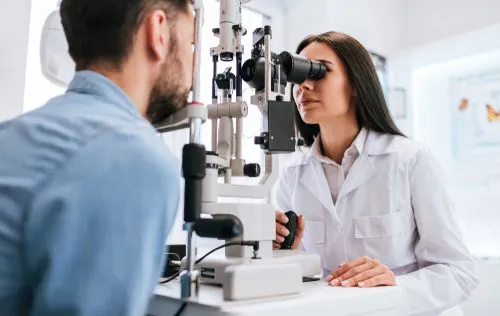
Causes of Glaucoma
Glaucoma develops when normal fluid dynamics in the eye are disrupted, resulting in increased intraocular pressure and stressing the optic nerve. This pressure may be produced by impaired drainage of aqueous humor or by structural factors that alter how fluid flows. Over time, nerve fibers are damaged, and visual field loss can occur. In many cases, the process is gradual and painless, which is why regular exams are critical.
Types of Glaucoma and Their Symptoms
Two major categories are commonly described, and each behaves differently.
- Open-Angle glaucoma, the most common form, is typically painless and progresses slowly; early symptoms often go unnoticed, and peripheral vision is typically the first thing affected.
- Closed-Angle glaucoma is less common but can present suddenly with eye pain, headache, nausea, blurred vision, and halos around lights, and it requires urgent attention. If experiencing any of these symptoms, it is important to call our office immediately to prevent blindness
Both types of glaucoma are diagnosed through pressure checks, optic nerve imaging, and visual field testing.
Who Is at Greater Risk
Risk factors should be monitored closely, and patients with these factors are advised to have more frequent screenings:
- Age over 60, though younger patients can be affected
- Family history of glaucoma
- African, Hispanic, or Asian ancestry
- High intraocular pressure or thin corneas
- History of eye injury, long-term steroid use, or certain medical conditions such as diabetes
Diagnosing Glaucoma
A comprehensive glaucoma workup includes tonometry to measure eye pressure, pachymetry to assess corneal thickness, optic nerve imaging such as OCT, and visual field testing. These tests are used together to detect subtle changes early, and treatment decisions are based on objective findings and patient-specific risk factors.
High Intraocular Eye Pressure Treatment Options
Glaucoma treatment in Chicago, IL, can slow or halt progression, and our approach is individualized:
- Prescription eye drops that lower pressure by decreasing fluid production or improving drainage
- Laser procedures that enhance outflow pathways or reduce fluid production
- Surgical options for advanced or refractory cases, which are coordinated with glaucoma specialists when needed
Why Choose Our Practice for Glaucoma Care
At MacQueen Eye Care Center, glaucoma treatment near you is delivered by an optometrist team that prioritizes patient education, careful monitoring, and coordinated referrals. When complex cases arise, a glaucoma doctor in Chicago, IL, will be engaged to ensure seamless, high-quality care.
Take the Next Step for Your Eye Health
If you have risk factors or questions about glaucoma, don’t wait for symptoms to appear. Call MacQueen Eye Care Center today at (773) 586-8444 to schedule your glaucoma evaluation with our trusted optometrist near you, Dr. MacQueen, and take a proactive step toward protecting your long-term vision.